
It happens like a scene from a movie. You’re sitting together, perhaps late at night or after a particularly deep conversation, and the walls finally come down. He tells you something he’s never told anyone else—a childhood wound, a professional failure, or his deepest fears about the future. In that moment, you feel a surge of connection. You think, This is it. We’ve finally reached a new level of intimacy.
But the next morning, or perhaps a few days later, something feels… off. He’s shorter with his texts. He seems preoccupied. The warmth you felt has been replaced by a subtle, chilly distance. If you’ve experienced this, you’ve witnessed the aftermath of a 'vulnerability hangover.'
Understanding why men experience this emotional recoil is the first step in protecting the bond you're building. When a man feels he has revealed too much too quickly, his internal alarm system goes off, often leading to a period of withdrawal while he processes the exposure. This phenomenon is more common than many realize, especially when why do men pull away when they start falling in love becomes a central question in your relationship.
What Exactly Is a Vulnerability Hangover?
The term, popularized by researcher Brené Brown, describes that gut-wrenching feeling of regret or 'exposure anxiety' after sharing something deeply personal. For men, this 'hangover' often carries a heavier weight due to societal expectations regarding masculinity and strength.
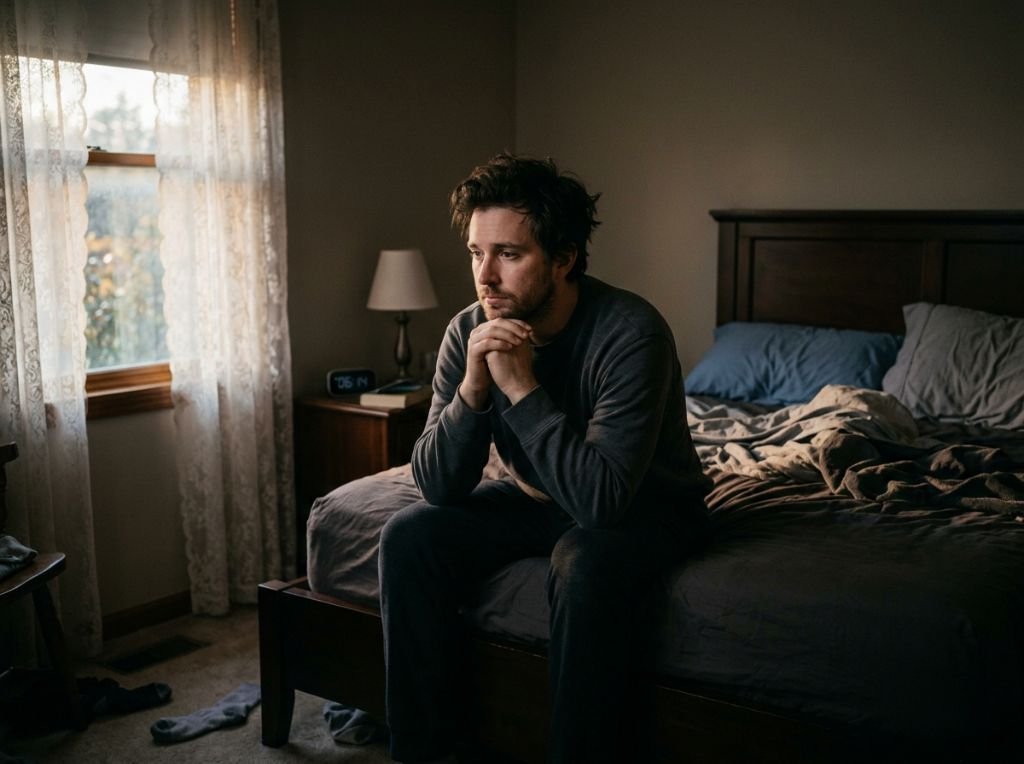
When a man shares his inner world, he is stepping outside of the traditional 'protector' or 'provider' role. This shift can trigger an immediate sense of psychological nakedness. He might wake up the next day thinking, Did I sound weak? Does she still respect me? Did I just give her the power to hurt me?
The Psychology of the Post-Sharing Retreat
To understand the male mind during this phase, you have to look at the intersection of biology and social conditioning. According to resources like Psychology Today, men are often taught from a young age to compartmentalize their emotions. When those compartments burst open in a moment of passion or closeness, the 'rebound' effect can be intense.
He isn't necessarily regretting the truth of what he said; he is regretting the loss of control he feels. This is often why a man might act distant after an incredibly intimate weekend or a significant milestone. He is trying to recalibrate his sense of self and regain the emotional equilibrium he feels he lost.
The 'Hero Instinct' and Emotional Exposure
One of the most profound drivers of male behavior in relationships is what relationship expert James Bauer calls the 'Hero Instinct.' This is the biological drive in men to feel essential, respected, and needed by the woman they love.
When a man experiences a vulnerability hangover, he often feels that his 'hero' status is at risk. He worries that by showing his cracks, he has lowered your opinion of him. This is a critical juncture in a relationship. If you can bridge this gap and show him that his vulnerability actually makes him more of a hero in your eyes, the bond becomes unbreakable.
Signs He’s Struggling with Emotional Exposure
It’s not always obvious when a man is in the throes of a vulnerability hangover. He won't usually say, 'I feel emotionally exposed and I'm scared.' Instead, you’ll see these subtle shifts:
- Increased Physical Space: He might suddenly become very busy with work or hobbies, creating a physical buffer between you.
- Shift to Surface-Level Topics: After a night of deep soul-searching, he might spend the next three days talking only about sports, weather, or logistics.
- Self-Deprecating Jokes: He might try to 'minimize' what he shared by making fun of himself or calling his previous openness 'stupid' or 'dramatic.'
- The 'Coolness' Factor: He adopts a stoic or overly 'chill' persona to overcompensate for the perceived weakness of the night before.
If you notice these signs, it's vital to know how to get a man to open up emotionally when he shuts down without making him feel pressured or cornered.
Why Speed Matters: The 'Too Much Too Fast' Trap
In the early stages of dating, momentum can be intoxicating. You spend six hours on the phone, share your life stories, and feel an instant soulmate connection. However, for many men, this rapid escalation triggers a 'vulnerability debt.'
He enjoys the intimacy in the moment, but his brain hasn't yet built the foundation of trust necessary to sustain that level of exposure. This is why what he is really thinking during the early stages of dating is often a mix of excitement and a subconscious 'fight or flight' response. When the sharing outpaces the trust-building, the hangover is almost inevitable.
How to Handle His Vulnerability Hangover (Without Losing Your Mind)
When he pulls back, your natural instinct might be to lean in. You want to reassure him, ask him what's wrong, or try to force another deep conversation to 'fix' the distance. In most cases, this is the worst thing you can do. It only increases his sense of being 'seen' when he’s trying to hide.
1. Give Him the 'Safe Harbor' Treatment
Instead of asking 'Why are you being distant?', simply be a warm, steady presence. Show him that your opinion of him hasn't changed. By acting normal and being supportive, you signal to his subconscious that his 'secret' is safe with you and that you don't view him as weak.
2. Focus on Appreciation
This is the perfect time to learn how to make him feel needed without being needy. Ask for his help with a small task or ask for his advice on a problem. This restores his sense of competence and helps him step back into his 'hero' role, which eases the shame of the vulnerability hangover.
3. Don't Rehash the Conversation Immediately
If he shared something heavy, let it sit. Don't bring it up the very next day unless he does. Let the emotional dust settle. He needs to realize that the world didn't end just because he was honest with you.
Building a Foundation for 'Safe' Vulnerability
Long-term relationship success isn't about avoiding vulnerability hangovers—it's about shortening their duration. As you grow together, he will learn that opening up doesn't lead to judgment, and you will learn the rhythm of his retreats.
Understanding his psychological needs is key to navigating these waters. When a man feels that you truly 'get' him, his need to retreat diminishes. This is the core of building a lasting, committed relationship where both partners feel safe enough to be fully known.
Conclusion
A man's vulnerability hangover isn't a sign that he’s falling out of love; in fact, it’s often a sign that he’s falling into it and is terrified by the lack of control that comes with deep feelings. By recognizing the signs of emotional exposure and responding with patience and appreciation rather than pressure, you create the emotional safety he needs to come back to you—this time, with even more of his heart.
FAQs
1. How long does a vulnerability hangover usually last?
It varies, but for most men, the 'withdrawal' phase lasts between 24 hours to a week. If he hasn't returned to his normal self after a week, it may be worth a gentle check-in using a 'softened start-up' approach.
2. Should I apologize for 'making' him open up?
No. Apologizing implies that what he did was a mistake or a 'bad' thing. Instead, thank him for his trust. Say something like, 'I really appreciated what you shared the other night, it made me feel a lot closer to you.' Then move on to a normal topic.
3. Does this mean he will never open up again?
Not at all. If handled correctly, each 'hangover' becomes less intense. He is testing the waters. Once he sees that you are a safe place for his truth, he will eventually open up more naturally without the need for a massive retreat.
4. What if he completely ghosts after sharing something deep?
While a vulnerability hangover involves pulling back, complete ghosting is usually a sign of deeper avoidant attachment issues or a lack of emotional maturity. If he disappears entirely, it’s a reflection of his inability to handle intimacy, not a reflection of your value.